• Home
  • Subjects
    • UPSC Commerce Optional
      • Syllabus – UPSC Commerce Optional
      • UPSC Commerce and Accountancy Optional Question Paper
      • Book
        • UPSC Commerce Optional Books – The Marathon of UPSC Commerce Optional
      • Blog
      • Courses
      • Answer Writing Practise
      • News
    • UGC NET – Commerce Optional
      • UGC NET – Syllabus
      • Past Papers
        • July 2018-Commerce
        • Dec 2017-Commerce
        • June 2017-Commerce
        • Dec 2016-Commerce
        • June 2016-Commerce
        • Dec 2015-Commerce
        • June 2015-Commerce
    • Chartered Accountant
      • Level-1 – Foundation
        • Syllabus
        • CA Level-1 Blog
      • Level-2 – Intermediate
        • Syllabus
        • CA Level-2 Blog
      • Level-3 – Final
        • Syllabus
        • CA Level-3 Blog
    • B.Com / M.Com
    • 11 Commerce
    • 12 Commerce
  • Blog
    • Income Tax
    • Economics
    • Accounts
    • Financial Management
    • HRM- Human Resource Management
    • Audit
    • Organization Behaviour
    • Industrial Relation (IR)
    • NCERT
      • 10th Class
      • 11th Class
      • 12th Class
      • 9th Class
  • Contact
    • Have any question?
    • +91 7905338496
    • achievercommerce@gmail.com
    Login
    Commerce Achiever
    • Home
    • Subjects
      • UPSC Commerce Optional
        • Syllabus – UPSC Commerce Optional
        • UPSC Commerce and Accountancy Optional Question Paper
        • Book
          • UPSC Commerce Optional Books – The Marathon of UPSC Commerce Optional
        • Blog
        • Courses
        • Answer Writing Practise
        • News
      • UGC NET – Commerce Optional
        • UGC NET – Syllabus
        • Past Papers
          • July 2018-Commerce
          • Dec 2017-Commerce
          • June 2017-Commerce
          • Dec 2016-Commerce
          • June 2016-Commerce
          • Dec 2015-Commerce
          • June 2015-Commerce
      • Chartered Accountant
        • Level-1 – Foundation
          • Syllabus
          • CA Level-1 Blog
        • Level-2 – Intermediate
          • Syllabus
          • CA Level-2 Blog
        • Level-3 – Final
          • Syllabus
          • CA Level-3 Blog
      • B.Com / M.Com
      • 11 Commerce
      • 12 Commerce
    • Blog
      • Income Tax
      • Economics
      • Accounts
      • Financial Management
      • HRM- Human Resource Management
      • Audit
      • Organization Behaviour
      • Industrial Relation (IR)
      • NCERT
        • 10th Class
        • 11th Class
        • 12th Class
        • 9th Class
    • Contact

      Accounts

      • Home
      • Blog
      • Learn - Free
      • Blogs
      • Accounts

      Assets-Meaning,Types-Business assets,Personal Assets,Current Assets,Fixed Assets (Commerce Achiever)

      • Posted by commerce achiever1
      • Categories Accounts, Blogs, Learn - Free
      • Date March 11, 2021

      An assets is anything of value or a resource of value that can be converted into cash. Individuals, companies, and governments own assets. For a company, an asset might generate revenue, or a company might benefit in some way from owning or using the asset. 

      KEY POINTS
      • An asset is something containing economic value and/or future benefit.
      • An asset can often generate cash flows in the future, such as a piece of machinery, a financial security, or a patent.
      • Personal assets may include a house, car, investments, artwork, or home goods.
      • For corporations, assets are listed on the balance sheet and netted against liabilities and equity.
      Personal Assets

      Personal assets are things of present or future value owned by an individual or household. Common examples of personal assets include:

      • Cash and cash equivalents, certificates of deposit, checking, and savings accounts, money market accounts, physical cash,Treasury Bills
      • Property or land and any structure that is permanently attached to it
      • Personal property – boats, collectibles, household furnishings, jewelry, vehicles
      • Investments – annuities, bonds, the cash value of life insurance policies, mutual funds, pensions, retirement plans, (IRA, 401(k), 403(b), etc.) stocks
      Your net worth is calculated by subtracting your liabilities from your assets. Essentially, your assets are everything you own, and your liabilities are everything you owe. A positive net worth indicates that your assets are greater in value than your liabilities; a negative net worth signifies that your liabilities exceed your assets (in other words, you are in debt).
      Business Assets

      For companies, assets are things of value that sustain production and growth. For a business, assets can include machines, property, raw materials and inventory – as well as intangibles such as patents, royalties, and other intellectual property.

      The balance sheet lists a company’s assets and shows how those assets are financed, whether through debt or through issuing equity. The balance sheet provides a snapshot of how well a company’s management is using its resources. There are two types of assets on a typical balance sheet.1

      Current Assets 

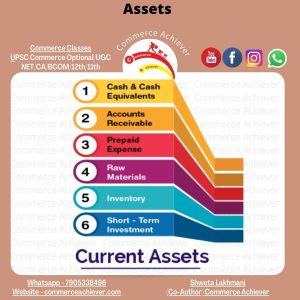
      Current Assets are assets that can be converted into cash within one fiscal year or one operating cycle. Current assets are used to facilitate day-to-day operational expenses and investments.

      Examples of current assets include:

      • Cash and cash equivalents: Treasury bills, certificates of deposit, and cash
      • Marketable securities: Debt securities or equity that is liquid
      • Account recievables: Money owed by customers to be paid in the short-term
      • Inventory: Goods available for sale or raw materials

      Fixed Assets
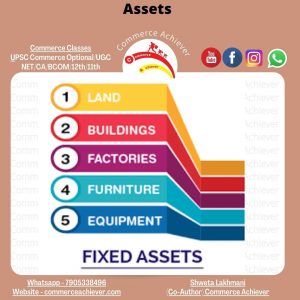
      Fixed assets are non-current assets that a company uses in its production or goods, and services that have a life of more than one year. Fixed assets are recorded on the balance sheet and listed as property,plant and equipment (PP&E). Fixed assets are long-term assets and are referred to as tangible assets, meaning they can be physically touched. 

      Examples of fixed assets include: 

      • Vehicles (such as company trucks)
      • Office furniture
      • Machinery
      • Buildings
      • Land

      The two key differences with business assets are non-current assets (like fixed assets) cannot be converted readily to cash to meet short-term operational expenses or investments. Conversely, current assets are expected to be liquidated within one fiscal year or one operating cycle.

      Tag:Assets, Business Assets, CAfoundation, CAfoundationaAccounts, CAfoundationClasses, CAfoundationEconomic, CAfoundationFees, CAfoundationLaw, CAfoundationRegistration, commerce, commerceachiever, CommerceAndAccountancy, CommerceBaba, Current assets, Fixed Assets, Personal Assets

      • Share:
      commerce achiever1

      Previous post

      Appropriation account (Commerce Achiever)
      March 11, 2021

      Next post

      Authorized Share Capital-Meaning,Issued Capital,Subscribed Capital, Paid-up Capital (Commerce Achiever)
      March 11, 2021

      You may also like

      functions & uses of Cost Accountant
      A medium size firm is making large profits and they do not have a Cost Accounting Department. There is a proposal to employ a Cost Accountant. What would you consider to be his functions and how can he make himself useful to the management
      June 16, 2023
      _Blog Post
      What are the functions of Cost Accounting?
      June 16, 2023
      UPSC Commerce and Accountancy Optional
      Commerce and Accountancy Optional Success Rate – UPSC Commerce & Accountancy Optional
      May 25, 2023
      • +91 7905338496
      • achievercommerce@gmail.com

      Our Subjects

      • UPSC Commerce Optional
      • UGC NET – Commerce Optional
      • Chartered Accountant
      • B.Com / M.Com
      • 11 Commerce
      • 12 Commerce

      Useful Links

      • Learn – Free
      • Income Tax
      • Economics
      • Accounts
      • Financial Management
      • HRM- Human Resource Management
      • Audit
      • Organization Behaviour
      • Industrial Relation (IR)
      • NCERT

      Subscribe

      Don’t lose out on any important Post and Update. Learn everyday with Experts!!

      Copyright © 2024-2025 Commerce Achiever | All Rights Reserved

      toto slot
      situs toto
      situs toto
      situs toto
      situs toto login
      toto slot
      toto slot
      idn slot
      slot hoki

      • Privacy
      • Terms
      • Sitemap
      • Purchase
      situs toto situs toto cerutu4d cerutu4d cerutu4d cerutu4d bo toto pulsa bo togel bo togel bo togel bo togel cerutu4d bandar toto macau bo toto situs togel situs togel cerutu4d cerutu4d cerutu4d cabe4d situs toto slot gacor situs togel situs toto agen toto situs togel situs toto situs togel resmi slot gacor slot gacor slot gacor
      situs toto situs toto cerutu4d cerutu4d cerutu4d cerutu4d bo toto pulsa bo togel bo togel bo togel bo togel cerutu4d bandar toto macau bo toto situs togel situs togel cerutu4d cerutu4d cerutu4d

      Login with your site account

      Lost your password?

      Message Us