• Home
  • Subjects
    • UPSC Commerce Optional
      • Syllabus – UPSC Commerce Optional
      • UPSC Commerce and Accountancy Optional Question Paper
      • Book
        • UPSC Commerce Optional Books – The Marathon of UPSC Commerce Optional
      • Blog
      • Courses
      • Answer Writing Practise
      • News
    • UGC NET – Commerce Optional
      • UGC NET – Syllabus
      • Past Papers
        • July 2018-Commerce
        • Dec 2017-Commerce
        • June 2017-Commerce
        • Dec 2016-Commerce
        • June 2016-Commerce
        • Dec 2015-Commerce
        • June 2015-Commerce
    • Chartered Accountant
      • Level-1 – Foundation
        • Syllabus
        • CA Level-1 Blog
      • Level-2 – Intermediate
        • Syllabus
        • CA Level-2 Blog
      • Level-3 – Final
        • Syllabus
        • CA Level-3 Blog
    • B.Com / M.Com
    • 11 Commerce
    • 12 Commerce
  • Blog
    • Income Tax
    • Economics
    • Accounts
    • Financial Management
    • HRM- Human Resource Management
    • Audit
    • Organization Behaviour
    • Industrial Relation (IR)
    • NCERT
      • 10th Class
      • 11th Class
      • 12th Class
      • 9th Class
  • Contact
    • Have any question?
    • +91 7905338496
    • achievercommerce@gmail.com
    Login
    Commerce Achiever
    • Home
    • Subjects
      • UPSC Commerce Optional
        • Syllabus – UPSC Commerce Optional
        • UPSC Commerce and Accountancy Optional Question Paper
        • Book
          • UPSC Commerce Optional Books – The Marathon of UPSC Commerce Optional
        • Blog
        • Courses
        • Answer Writing Practise
        • News
      • UGC NET – Commerce Optional
        • UGC NET – Syllabus
        • Past Papers
          • July 2018-Commerce
          • Dec 2017-Commerce
          • June 2017-Commerce
          • Dec 2016-Commerce
          • June 2016-Commerce
          • Dec 2015-Commerce
          • June 2015-Commerce
      • Chartered Accountant
        • Level-1 – Foundation
          • Syllabus
          • CA Level-1 Blog
        • Level-2 – Intermediate
          • Syllabus
          • CA Level-2 Blog
        • Level-3 – Final
          • Syllabus
          • CA Level-3 Blog
      • B.Com / M.Com
      • 11 Commerce
      • 12 Commerce
    • Blog
      • Income Tax
      • Economics
      • Accounts
      • Financial Management
      • HRM- Human Resource Management
      • Audit
      • Organization Behaviour
      • Industrial Relation (IR)
      • NCERT
        • 10th Class
        • 11th Class
        • 12th Class
        • 9th Class
    • Contact

      Accounts

      • Home
      • Blog
      • Learn - Free
      • Blogs
      • Accounts

      Lease-Definition,Types,Breaking a Lease,Commercial leases and its types (Commerce Achiever)
      • Posted by commerce achiever1
      • Categories Accounts, Blogs, Learn - Free
      • Date April 9, 2021

      A lease is a contract outlining the terms under which one party agrees to rent property owned by another party. It guarantees the lessee, also known as the tenant, use of an asset and guarantees the lessor, the property owner or landlord, regular payments for a specified period in exchange. Both the lessee and the lessor face consequences if they fail to uphold the terms of the contract. It is a form of incorporeal right.

      Understanding a Lease
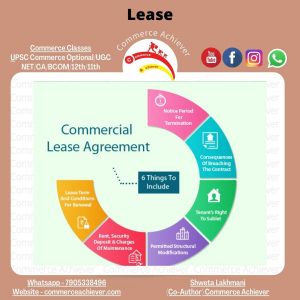
      Leases are legal and binding contracts that set forth the terms of rental agreements in real estate and real and personal property. These contracts stipulate the duties of each party to effect and maintain the agreement and are enforceable by each. For example, a residential property lease includes the address of the property, landlord responsibilities, and tenant responsibilities, such as the rent amount, a required security deposit, rent due date, consequences for breach of contract, the duration of the lease, pet policies, and any other essential information.

      Not all leases are designed the same, but there are some common features: rent amount, due date, lessee and lessor, etc. The landlord requires the tenant to sign the lease, thereby agreeing to its terms before occupying the property. Leases for commercial properties, on the other hand, are usually negotiated in accordance with the specific lessee and typically run from one to 10 years, with larger tenants often having longer, complex lease agreements. The landlord and tenant should retain a copy of the lease for their records. This is especially helpful when disputes arise.

      KEY POINTS

      • A lease is a contract outlining the terms under which one party agrees to rent property owned by another party.
      • The lease guarantees the tenant, also known as the lessee, use of an asset and guarantees the lessor, the property owner or landlord, regular payments for a specified period in exchange. 
      • Leases are legal and binding contracts that set forth the terms of rental agreements in real estate and real and personal property.
      • Consequences for breaking leases range from mild to damaging, depending on the circumstances under which they are broken.

      Breaking a Lease

      Consequences for breaking leases range from mild to damaging, depending on the circumstances under which they are broken. A tenant who breaks a lease without prior negotiation with the landlord faces a civil lawsuit, a derogatory mark on their credit report, or both. As a result of breaking a lease,a tenant may encounter problems renting a new residence, as well as other issues associated with having negative entries on a credit report. Tenants who need to break their leases must often negotiate with their landlords or seek legal counsel. In some cases, finding a new tenant for the property or forfeiting the security deposit inspires landlords to allow tenants to break their leases with no further consequences. 

      The terms of a lease are not automatically enforceable, so a clause that allows a landlord to enter the premises at any time without notice or one that, via court action, grants a landlord to recover more than statutory limits is not enforceable.

      Some leases have early termination clauses that allow tenants to terminate the contracts under a specific set of conditions or when their landlords do not fulfill their contractual obligations. For example, a tenant may be able to terminate a lease if the landlord does not make timely repairs to the property.

      Commercial Leases
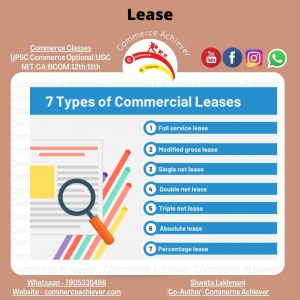
      Tenants who lease commercial properties have a variety of lease types available, all of which are structured to assign more responsibility on the tenant and provide greater up-front profit for the landlord. Some commercial leases require the tenant to pay rent plus the landlord’s operational costs, while others require tenants to pay rent plus property taxes and insurance. The four most common types of commercial real estate leases include:

      • Single Net Leases: In this kind of lease, the tenant is responsible for paying property taxes.
      • Double-Net Leases: These leases make a tenant responsible for property taxes and insurance.
      • Triple-Net Leases: Tenants who sign these leases pay property taxes, insurance, and maintenance costs.
      • Gross Leases: Tenants pay rent while the landlord is responsible for other costs.

      Tag:Breaking a Lease, CAfoundation, CAfoundationaAccounts, CAfoundationClasses, CAfoundationEconomic, CAfoundationFees, CAfoundationLaw, CAfoundationRegistration, commerce, commerceachiever, CommerceAndAccountancy, CommerceBaba, Commercial Leases, Lease

      • Share:
      commerce achiever1

      Previous post

      Lien-Definition,Explanations,Types,Examples (Commerce Achiever)
      April 9, 2021

      Next post

      Materiality-Definition,Explanation,Examples (Commerce Achiever)
      April 10, 2021

      You may also like

      functions & uses of Cost Accountant
      A medium size firm is making large profits and they do not have a Cost Accounting Department. There is a proposal to employ a Cost Accountant. What would you consider to be his functions and how can he make himself useful to the management
      June 16, 2023
      _Blog Post
      What are the functions of Cost Accounting?
      June 16, 2023
      UPSC Commerce and Accountancy Optional
      Commerce and Accountancy Optional Success Rate – UPSC Commerce & Accountancy Optional
      May 25, 2023
      • +91 7905338496
      • achievercommerce@gmail.com

      Our Subjects

      • UPSC Commerce Optional
      • UGC NET – Commerce Optional
      • Chartered Accountant
      • B.Com / M.Com
      • 11 Commerce
      • 12 Commerce

      Useful Links

      • Learn – Free
      • Income Tax
      • Economics
      • Accounts
      • Financial Management
      • HRM- Human Resource Management
      • Audit
      • Organization Behaviour
      • Industrial Relation (IR)
      • NCERT

      Subscribe

      Don’t lose out on any important Post and Update. Learn everyday with Experts!!

      Copyright © 2024-2025 Commerce Achiever | All Rights Reserved

      toto slot
      situs toto
      situs toto
      situs toto
      situs toto login
      toto slot
      toto slot
      idn slot
      slot hoki

      • Privacy
      • Terms
      • Sitemap
      • Purchase
      situs toto situs toto cerutu4d cerutu4d cerutu4d cerutu4d bo toto pulsa bo togel bo togel bo togel bo togel cerutu4d bandar toto macau bo toto situs togel situs togel cerutu4d cerutu4d cerutu4d cabe4d situs toto slot gacor situs togel situs toto agen toto situs togel situs toto situs togel resmi slot gacor slot gacor slot gacor
      situs toto situs toto cerutu4d cerutu4d cerutu4d cerutu4d bo toto pulsa bo togel bo togel bo togel bo togel cerutu4d bandar toto macau bo toto situs togel situs togel cerutu4d cerutu4d cerutu4d

      Login with your site account

      Lost your password?

      Message Us