

Mortgage-Meaning,The Mortgage Process,Types of Mortgages,How to Compare Mortgages (Commerce Achiever)
 A mortgage is a loan that the borrower uses to purchase or maintain a home or other form of real estate and agrees to pay back over time, typically in a series of regular payments. The property serves as collateral to secure the loan.
KEY POINTS
- Mortgages are loans that are used to buy homes and other real estate.
- The property itself serves as collateral for the loan
- Mortgages are available in a variety of types, including fixed-rate and adjustable-rate.
- The cost of a mortgage will depend on the type of loan, the term (such as 30 years), and the interest rate the lender charges.
How Mortgages Work
Individuals and businesses use mortgages to buy real estate without paying the entire purchase price upfront. Over a specified number of years, the borrower repays the loan, plus interest, until they own the property free and clear. Mortgages are also known as “liens against property” or “claims on property.” If the borrower stops paying the mortgage, the lender can foreclose on the property.
For example, in a residential mortgage, a homebuyer pledges their house to the bank or other lender, which then has a claim on the property should the buyer default on paying the mortgage. In the case of a foreclosure, the lender may evict the home’s residents and sell the property, using the money from the sale to pay off the mortgage debt.
The Mortgage Process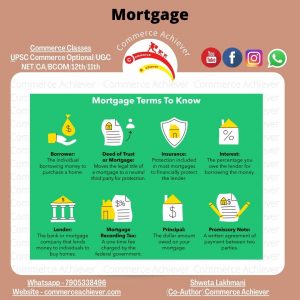
Would-be borrowers begin the process by applying to one or more mortgage lenders. The lender will ask for evidence that the borrower is capable of repaying the loan, which might include bank and investment statements, recent tax returns, and proof of current employment. The lender will generally run a credit check, as well.
If the application is approved, the lender will offer the borrower a loan of up to a certain amount and at a particular interest rate. Homebuyers can apply for a mortgage after they have chosen a property to buy or while they are still shopping for one, a process known as pre-approval. Being pre-approved for a mortgage can give buyers an edge in a tight housing market because sellers will know that they have the money to back up their offer.
Once a buyer and seller have agreed on the terms of their deal, they or their representatives will meet at what’s called a closing. The seller will transfer ownership of the property to the buyer and receive the agreed-upon sum of money, and the buyer will sign any remaining mortgage documents.
Types of Mortgages
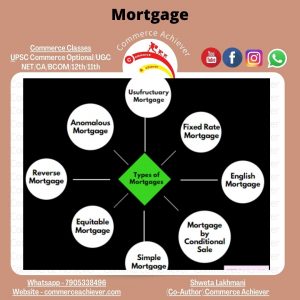
Mortgages come in a variety of forms. The most common types are 30-year and 15-year fixed-rate mortgages. Some mortgages can have terms as short as five years, while others can run 40 years or longer. Stretching payments over more years reduces the monthly payment but increases the total amount of interest that the borrower will pay over the life of the loan.
With a fixed-rate mortgage, the interest rate stays the same for the entire term of the loan, as do the borrower’s monthly payments toward the mortgage. A fixed-rate mortgage is also called a “traditional” mortgage.
With an adjustable-rate mortgage (ARM), the interest rate is fixed for an initial term, after which it can change periodically based on prevailing interest rates. The initial interest-rate is often a below-market rate, which can make the mortgage more affordable in the short term but possibly less affordable long-term, if the rate rises substantially. Adjustable-rate mortgages typically have limits, or caps, on how much the interest rate can rise each time its adjusts and in-total over the life of the loan.
Other, less common types of mortgages, such as interest-only mortgage and payment-option ARMs, can involve complex repayment schedules and are best used by sophisticated borrowers. Many homeowners got into financial trouble with these types of mortgages during the housing bubble of the early 2000s.
As their name suggests, reverse mortgages are a very different financial product. They are designed for homeowners 62 or older who want to convert part of the equity in their homes into cash. These homeowners can borrow against the value of their home and receive the money as a lump sum, fixed monthly payment, or line of credit. The entire loan balance becomes due when the borrower dies, moves away permanently, or sells the home.
Average Mortgage Rates 2020
How much you’ll have to pay for a mortgage depends on the type of mortgage (such as fixed or adjustable, its term (such as 20 or 30 years), and interest rates at the time. Interest rates can vary from week to week and from lender to lender, so it pays to shop around.
In 2020, mortgage rates were at near-record lows. At year’s end, average interest rates, according to the Federal Home Loan Mortgage Corporation.
- 30-year fixed-rate mortgage: 2.67%
- 15-year fixed-rate mortgage: 2.17%
- 5/1 adjustable-rate mortgage: 2.71%
( A 5/1 adjustable-rate mortgage is an ARM that maintains a fixed interest rate for the first five years, then adjusts each year after that.)
Your mortgage may represent only a portion of your monthly mortgage payment if your lender also requires you to pay your property taxes and homeowners insurance through an escrow account.
How to Compare Mortgages
Banks, savings and loan associations, and credit unions were virtually the only sources of mortgages at one time. Today a burgeoning share of the mortgage market includes non-bank lenders, such as Better.com, LoanDepot, Rocket Mortgage, and SoFi.
If you’re shopping for a mortgage, an online mortgage-calculator can help you compare estimated monthly payments, based on the type of mortgage, the interest rate, and how large a down payment you plan to make. It can also help you determine how expensive a property you can reasonably afford.
In addition to the principal and interest, you’ll be paying on the mortgage, the lender or mortgage servicer may also set up an escrow account to pay local property taxes, homeowners insurance premiums, and certain other expenses. Those costs will add to your monthly mortgage payment.
Also note that if you make less than a 20% down payment when you take out your mortgage, your lender may require that you purchase Private Mortgage Insurance (PMI), which becomes another added monthly cost.
Why do people need mortgages?
The price of a home is often far greater than the amount of money saved by most households. As a result, mortgages allow individuals and families to purchase a home by putting down only a relatively small down payment (e.g. 20%) and obtaining a loan for the balance. The loan is then secured by the value of the property in case the borrower defaults.
Can anybody get a mortgage?
Mortgage lenders will need to approve prospective borrowers through a process of application and underwritting. Home loans will only be provided to those who have sufficient assets and income relative to their debts to practically carry the value of a home over time. One’s credit score will also be evaluated when making the decision to extend a mortgage. The interest rate on the mortgage will also vary, with riskier borrowers receiving higher interest rates.
What does fixed vs. variable mean on a mortgage?
Many mortgages carry a fixed interest rate, meaning that it will not change for the entire term of the mortgage (typically 30 or 15 years) even if interest rates rise or fall in the future. A variable, or adjustable-rate mortgage (ARM) instead has an interest rate that fluctuates over the loan’s life based on what interest rates are doing.
How many mortgages can I have on my home?
Generally, lenders will issue a first, or primary mortgage, and then allow for a second mortgage, known as a home-equity loan. Most lenders will not provide for a subsequent mortgage backed by the same property.
Where can I get a mortgage?
Mortgages are offered by a variety of sources. Banks and credit unions will often provide home loans, and there are also specialized mortgage companies that only deal with home loans. You may also employ an unaffiliated mortgage broker to help you shop around for the best rate among different lenders.

You may also like


