• Home
  • Subjects
    • UPSC Commerce Optional
      • Syllabus – UPSC Commerce Optional
      • UPSC Commerce and Accountancy Optional Question Paper
      • Book
        • UPSC Commerce Optional Books – The Marathon of UPSC Commerce Optional
      • Blog
      • Courses
      • Answer Writing Practise
      • News
    • UGC NET – Commerce Optional
      • UGC NET – Syllabus
      • Past Papers
        • July 2018-Commerce
        • Dec 2017-Commerce
        • June 2017-Commerce
        • Dec 2016-Commerce
        • June 2016-Commerce
        • Dec 2015-Commerce
        • June 2015-Commerce
    • Chartered Accountant
      • Level-1 – Foundation
        • Syllabus
        • CA Level-1 Blog
      • Level-2 – Intermediate
        • Syllabus
        • CA Level-2 Blog
      • Level-3 – Final
        • Syllabus
        • CA Level-3 Blog
    • B.Com / M.Com
    • 11 Commerce
    • 12 Commerce
  • Blog
    • Income Tax
    • Economics
    • Accounts
    • Financial Management
    • HRM- Human Resource Management
    • Audit
    • Organization Behaviour
    • Industrial Relation (IR)
    • NCERT
      • 10th Class
      • 11th Class
      • 12th Class
      • 9th Class
  • Contact
    • Have any question?
    • +91 7905338496
    • achievercommerce@gmail.com
    Login
    Commerce Achiever
    • Home
    • Subjects
      • UPSC Commerce Optional
        • Syllabus – UPSC Commerce Optional
        • UPSC Commerce and Accountancy Optional Question Paper
        • Book
          • UPSC Commerce Optional Books – The Marathon of UPSC Commerce Optional
        • Blog
        • Courses
        • Answer Writing Practise
        • News
      • UGC NET – Commerce Optional
        • UGC NET – Syllabus
        • Past Papers
          • July 2018-Commerce
          • Dec 2017-Commerce
          • June 2017-Commerce
          • Dec 2016-Commerce
          • June 2016-Commerce
          • Dec 2015-Commerce
          • June 2015-Commerce
      • Chartered Accountant
        • Level-1 – Foundation
          • Syllabus
          • CA Level-1 Blog
        • Level-2 – Intermediate
          • Syllabus
          • CA Level-2 Blog
        • Level-3 – Final
          • Syllabus
          • CA Level-3 Blog
      • B.Com / M.Com
      • 11 Commerce
      • 12 Commerce
    • Blog
      • Income Tax
      • Economics
      • Accounts
      • Financial Management
      • HRM- Human Resource Management
      • Audit
      • Organization Behaviour
      • Industrial Relation (IR)
      • NCERT
        • 10th Class
        • 11th Class
        • 12th Class
        • 9th Class
    • Contact

      Accounts

      • Home
      • Blog
      • Learn - Free
      • Blogs
      • Accounts

      Bills of Exchange-Meaning,Types,Features (Commerce Achiever)

      • Posted by commerce achiever1
      • Categories Accounts, Blogs, Learn - Free
      • Date March 12, 2021

      A bill of exchange is a written order used primarily in international trade that binds one party to pay a fixed sum of money to another party on demand or at a predetermined date. Bills of exchange are similar to checks and promissory notes—they can be drawn by individuals or banks and are generally transferable by endorsements.

      KEY POINTS

      • A bill of exchange is a written order binding one party to pay a fixed sum of money to another party on demand or at some point in the future.
      • A bill of exchange often includes three parties—the drawee is the party that pays the sum, the payee receives that sum, and the drawer is the one that obliges the drawee to pay the payee.
      • A bill of exchange is used in international trade to help importers and exporters fulfill transactions.
      • While a bill of exchange is not a contract itself, the involved parties can use it to specify the terms of a transaction, such as the credit terms and the rate of accrued interest.

      How a Bill of Exchange Works
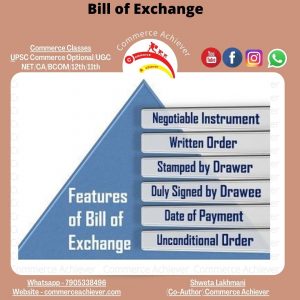
      A bill of exchange transaction can involve up to three parties. The drawee is the party that pays the sum specified by the bill of exchange. The payee is the one who receives that sum. The drawer is the party that obliges the drawee to pay the payee. The drawer and the payee are the same entity unless the drawer transfers the bill of exchange to a third-party payee.

      Unlike a check, however, a bill of exchange is a written document outlining a debtor’s indebtedness to a creditor. It’s frequently used in international trade to pay for goods or services. While a bill of exchange is not a contract itself, the involved parties can use it to fulfill the terms of a contract. It can specify that payment is due on demand or at a specified future date. It’s often extended with credit terms, such as 90 days. As well, a bill of exchange must be accepted by the drawee to be valid.

      Bills of exchange generally do not pay interest, making them in essence post-dated cheques. They may accrue interest if not paid by a certain date, however, in which case the rate must be specified on the instrument. They can, conversely, be transferred at a discount before the date specified for payment. A bill of exchange must clearly detail the amount of money, the date, and the parties involved including the drawer and drawee.

      Bills of exchange are useful in international trade because they help buyers and sellers deal with the risks associated with exchange rate fluctuations and differences in legal jurisdictions.

      Types of Bills of Exchange
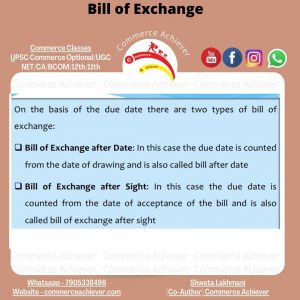
      If a bill of exchange is issued by a bank, it can be referred to as a bank draft. The issuing bank guarantees payment on the transaction. If bills of exchange are issued by individuals, they can be referred to as trade drafts.

      If the funds are to be paid immediately or on-demand, the bill of exchange is known as a sight draft. In international trade, a sight draft allows an exporter to hold title to the exported goods until the importer takes delivery and immediately pays for them. However, if the funds are to be paid at a set date in the future, it is known as a time draft. A time draft gives the importer a short amount of time to pay the exporter for the goods after receiving them.

      Bill of Exchange vs. Promissory Note

      The difference between a promissory note and a bills of exchange is that the latter is transferable and can bind one party to pay a third party that was not involved in its creation. Banknotes are common forms of promissory notes. A bill of exchange is issued by the creditor and orders a debtor to pay a particular amount within a given period of time. The promissory note, on the other hand, is issued by the debtor and is a promise to pay a particular amount of money in a given period.

      Tag:Bill of Exchange, CAfoundation, CAfoundationaAccounts, CAfoundationClasses, CAfoundationEconomic, CAfoundationFees, CAfoundationLaw, CAfoundationRegistration, commerce, commerceachiever, CommerceAndAccountancy, CommerceBaba

      • Share:
      commerce achiever1

      Previous post

      Balance Sheet-Meaning,Share holder's equity,Assets,liabilities,limitations of balance sheet (Commerce Achiever)
      March 12, 2021

      Next post

      Bonus shares-Definition,Process,Tax Implications (Commerce Achiever)
      March 13, 2021

      You may also like

      functions & uses of Cost Accountant
      A medium size firm is making large profits and they do not have a Cost Accounting Department. There is a proposal to employ a Cost Accountant. What would you consider to be his functions and how can he make himself useful to the management
      June 16, 2023
      _Blog Post
      What are the functions of Cost Accounting?
      June 16, 2023
      UPSC Commerce and Accountancy Optional
      Commerce and Accountancy Optional Success Rate – UPSC Commerce & Accountancy Optional
      May 25, 2023
      • +91 7905338496
      • achievercommerce@gmail.com

      Our Subjects

      • UPSC Commerce Optional
      • UGC NET – Commerce Optional
      • Chartered Accountant
      • B.Com / M.Com
      • 11 Commerce
      • 12 Commerce

      Useful Links

      • Learn – Free
      • Income Tax
      • Economics
      • Accounts
      • Financial Management
      • HRM- Human Resource Management
      • Audit
      • Organization Behaviour
      • Industrial Relation (IR)
      • NCERT

      Subscribe

      Don’t lose out on any important Post and Update. Learn everyday with Experts!!

      Copyright © 2024-2025 Commerce Achiever | All Rights Reserved

      toto slot
      situs toto
      situs toto
      situs toto
      situs toto login
      toto slot
      toto slot
      idn slot
      slot hoki

      • Privacy
      • Terms
      • Sitemap
      • Purchase
      situs toto situs toto cerutu4d cerutu4d cerutu4d cerutu4d bo toto pulsa bo togel bo togel bo togel bo togel cerutu4d bandar toto macau bo toto situs togel situs togel cerutu4d cerutu4d cerutu4d cabe4d situs toto slot gacor situs togel situs toto agen toto situs togel situs toto situs togel resmi slot gacor slot gacor slot gacor
      situs toto situs toto cerutu4d cerutu4d cerutu4d cerutu4d bo toto pulsa bo togel bo togel bo togel bo togel cerutu4d bandar toto macau bo toto situs togel situs togel cerutu4d cerutu4d cerutu4d

      Login with your site account

      Lost your password?

      Message Us