• Home
  • Subjects
    • UPSC Commerce Optional
      • Syllabus – UPSC Commerce Optional
      • UPSC Commerce and Accountancy Optional Question Paper
      • Book
        • UPSC Commerce Optional Books – The Marathon of UPSC Commerce Optional
      • Blog
      • Courses
      • Answer Writing Practise
      • News
    • UGC NET – Commerce Optional
      • UGC NET – Syllabus
      • Past Papers
        • July 2018-Commerce
        • Dec 2017-Commerce
        • June 2017-Commerce
        • Dec 2016-Commerce
        • June 2016-Commerce
        • Dec 2015-Commerce
        • June 2015-Commerce
    • Chartered Accountant
      • Level-1 – Foundation
        • Syllabus
        • CA Level-1 Blog
      • Level-2 – Intermediate
        • Syllabus
        • CA Level-2 Blog
      • Level-3 – Final
        • Syllabus
        • CA Level-3 Blog
    • B.Com / M.Com
    • 11 Commerce
    • 12 Commerce
  • Blog
    • Income Tax
    • Economics
    • Accounts
    • Financial Management
    • HRM- Human Resource Management
    • Audit
    • Organization Behaviour
    • Industrial Relation (IR)
    • NCERT
      • 10th Class
      • 11th Class
      • 12th Class
      • 9th Class
  • Contact
    • Have any question?
    • +91 7905338496
    • achievercommerce@gmail.com
    Login
    Commerce Achiever
    • Home
    • Subjects
      • UPSC Commerce Optional
        • Syllabus – UPSC Commerce Optional
        • UPSC Commerce and Accountancy Optional Question Paper
        • Book
          • UPSC Commerce Optional Books – The Marathon of UPSC Commerce Optional
        • Blog
        • Courses
        • Answer Writing Practise
        • News
      • UGC NET – Commerce Optional
        • UGC NET – Syllabus
        • Past Papers
          • July 2018-Commerce
          • Dec 2017-Commerce
          • June 2017-Commerce
          • Dec 2016-Commerce
          • June 2016-Commerce
          • Dec 2015-Commerce
          • June 2015-Commerce
      • Chartered Accountant
        • Level-1 – Foundation
          • Syllabus
          • CA Level-1 Blog
        • Level-2 – Intermediate
          • Syllabus
          • CA Level-2 Blog
        • Level-3 – Final
          • Syllabus
          • CA Level-3 Blog
      • B.Com / M.Com
      • 11 Commerce
      • 12 Commerce
    • Blog
      • Income Tax
      • Economics
      • Accounts
      • Financial Management
      • HRM- Human Resource Management
      • Audit
      • Organization Behaviour
      • Industrial Relation (IR)
      • NCERT
        • 10th Class
        • 11th Class
        • 12th Class
        • 9th Class
    • Contact

      Accounts

      • Home
      • Blog
      • Learn - Free
      • Blogs
      • Accounts

      Accounting convention-Meaning,Understanding,Methods,Application (Commerce Achiever)

      • Posted by commerce achiever1
      • Categories Accounts, Blogs, Learn - Free
      • Date March 6, 2021

      What Is an Accounting Convention?

      Accounting conventions are guidelines used to help companies determine how to record certain business transactions that have not yet been fully addressed by accounting standards. These procedures and principles are not legally binding but are generally accepted by accounting bodies. Basically, they are designed to promote consistency and help accountants overcome practical problems that can arise when preparing financial statements.

      KEY POINTS

      • Accounting conventions are guidelines used to help companies determine how to record business transactions not yet fully covered by accounting standards.
      • They are generally accepted by accounting bodies but are not legally binding.
      • If an oversight organization sets forth a guideline that addresses the same topic as the accounting convention, the accounting convention is no longer applicable.
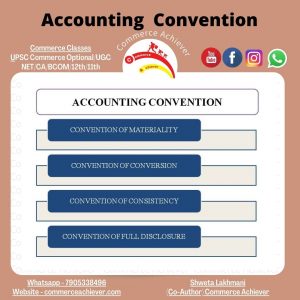
      • There are four widely recognized accounting conventions: conservatism, consistency, full disclosure, and materiality. 

      Understanding an Accounting Convention

      Sometimes, there is not a definitive guideline in the accounting standards that govern a specific situation. In such cases, accounting conventions can be referred to.

      Accounting is full of assumptions, concepts, standards, and conventions. Concepts such as relevance, reliability, materiality, and comparability are often supported by accounting conventions that help to standardize the financial reporting process.
      In short, accounting conventions serve to fill in the gaps not yet addressed by accounting standards.The scope and detail of accounting standards continue to widen, meaning that there are now fewer accounting conventions that can be used. Accounting conventions are not set in stone, either. Instead, they can evolve over time to reflect new ideas and opinions on the best way to record transactions.
      Accounting conventions are important because they ensure that multiple different companies record transactions in the same way. Providing a standardized methodology makes it easier for investors to compare the financial results of different firms, such as competing ones operating in the same sector.

      Accounting Convention Methods

      There are four main accounting conventions designed to assist accountants:

      • Conservatism: Playing it safe is both an accounting principles and convention. It tells accountants to err on the side of caution when providing estimates for assets and liabilities. That means that when two values of a transaction are available, the lower one should be favored. The general concept is to factor in the worst-case scenario of a firm’s financial future.
      • Consistency: A company should apply the same accounting principles across different accounting cycles. Once it chooses a method it is urged to stick with it in the future, unless it has a good reason to do otherwise. Without this convention, investors’ ability to compare and assess how the company performs from one period to the next is made much more challenging.
      • Full Disclosure: Information considered potentially important and relevant must be revealed, regardless of whether it is detrimental to the company.
      • Materiality: Like full disclosure, this convention urges companies to lay all their cards on the table. If an item or event is material, in other words important, it should be disclosed. The idea here is that any information that could influence the decision of a person looking at the financial statement must be included.

      Areas Where Accounting Conventions Apply

      Accounting conservatism may be applied to inventory valuations. When determining the reporting value of inventory, conservatism dictates that the lower of historical cost or replacement cost should be the monetary value.

      Estimations such as uncollectible accounts recievables and casualty losses also use the conservatism convention. If a company expects to win a litigation claim, it cannot report the gain until it meets all revenue recognition principles. However, if a litigation claim is expected to be lost, an estimated economic impact is required in the notes to the financial statements. Contigent liabilities such as royalty payments or unearned revenue are to be disclosed, too.

      Tag:Accounting convention methods, Accounting conventions, CAfoundation, CAfoundationaAccounts, CAfoundationClasses, CAfoundationEconomic, CAfoundationFees, CAfoundationLaw, CAfoundationRegistration, commerce, commerceachiever, CommerceAndAccountancy, CommerceBaba, Conservatism, Consistency, Full Disclosure, Materiality

      • Share:
      commerce achiever1

      Previous post

      Accountng Principles (Commerce Achiever)
      March 6, 2021

      Next post

      Fundamental Accounting Assumptions-Going concern, Consistency, Accural (Commerce Achiever)
      March 6, 2021

      You may also like

      functions & uses of Cost Accountant
      A medium size firm is making large profits and they do not have a Cost Accounting Department. There is a proposal to employ a Cost Accountant. What would you consider to be his functions and how can he make himself useful to the management
      June 16, 2023
      _Blog Post
      What are the functions of Cost Accounting?
      June 16, 2023
      UPSC Commerce and Accountancy Optional
      Commerce and Accountancy Optional Success Rate – UPSC Commerce & Accountancy Optional
      May 25, 2023
      • +91 7905338496
      • achievercommerce@gmail.com

      Our Subjects

      • UPSC Commerce Optional
      • UGC NET – Commerce Optional
      • Chartered Accountant
      • B.Com / M.Com
      • 11 Commerce
      • 12 Commerce

      Useful Links

      • Learn – Free
      • Income Tax
      • Economics
      • Accounts
      • Financial Management
      • HRM- Human Resource Management
      • Audit
      • Organization Behaviour
      • Industrial Relation (IR)
      • NCERT

      Subscribe

      Don’t lose out on any important Post and Update. Learn everyday with Experts!!

      Copyright © 2024-2025 Commerce Achiever | All Rights Reserved

      toto slot
      situs toto
      situs toto
      situs toto
      situs toto login
      toto slot
      toto slot
      idn slot
      slot hoki

      • Privacy
      • Terms
      • Sitemap
      • Purchase
      situs toto situs toto cerutu4d cerutu4d cerutu4d cerutu4d bo toto pulsa bo togel bo togel bo togel bo togel cerutu4d bandar toto macau bo toto situs togel situs togel cerutu4d cerutu4d cerutu4d cabe4d situs toto slot gacor situs togel situs toto agen toto situs togel situs toto situs togel resmi slot gacor slot gacor slot gacor
      situs toto situs toto cerutu4d cerutu4d cerutu4d cerutu4d bo toto pulsa bo togel bo togel bo togel bo togel cerutu4d bandar toto macau bo toto situs togel situs togel cerutu4d cerutu4d cerutu4d

      Login with your site account

      Lost your password?

      Message Us