

Bad Debts-Meaning,Understanding,Recording Bad Debts (Commerce Achiever)
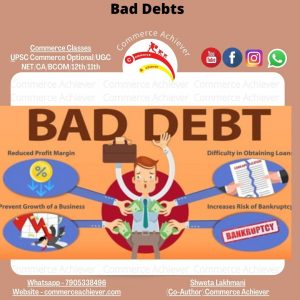
Bad debt is an expense that a business incurs once the repayment of credit previously extended to a customer is estimated to be uncollectible. Bad debt is a contingency that must be accounted for by all businesses who extend credit to customers, as there is always a risk that payment will not be received.
KEY POINTS
- Bad debt expense is an unfortunate cost of doing business with customers on credit, as there is always a default risk inherent to extending credit.
- To comply with the matching principle, bad debt expense must be estimated using the allowance method in the same period in which the sale occurs.
- There are two main ways to estimate an allowance for bad debts: the percentage sales method and the accounts receivable aging method.
- Bad debts can be written-off on both business and individual tax returns.
There are two methods available to recognize bad debt expense. Using the direct write-off method, accounts are written off as they are directly identified as being uncollectible. This method is used in the United States for income tax purposes. However, while the direct write-off method records the precise figure for accounts that have been determined to be uncollectible, it fails to adhere to the matching principle used in accrual accounting and generally accepted accounting principles (GAAP).
The matching principle requires that expenses be matched to related revenues in the same accounting period in which the revenue transaction occurs. Therefore, in accordance with GAAP, bad debt expense must be estimated using the allowance method in the same period in which the credit sale occurs and appears on the income statement under the sales and general administrative expense section. Because no significant period of time has passed since the sale, a company does not know which exact accounts will be paid and which will default. So, an amount is established based on an anticipated and estimated figure. Companies often use their historical experience to estimate the percentage of sales they expect to become bad debt.
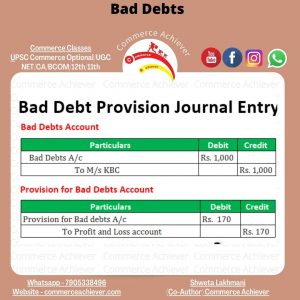
When recording estimated bad debts, a debit entry is made to bad debt expense and an offsetting credit entry is made to a contra asset account, commonly referred to as the allowance for doubtfull accounts. The allowance for doubtful accounts nets against the total accounts recievables presented on the balance sheet to reflect only the amount estimated to be collectible. This allowance accumulates across accounting periods and may be adjusted based on the balance in the account.
Two primary methods exist for estimating the dollar amount of accounts receivables not expected to be collected. Bad debt expense can be estimated using statistical modeling such as default probability to determine a company’s expected losses to delinquent and bad debt. The statistical calculations utilize historical data from the business as well as from the industry as a whole. The specific percentage will typically increase as the age of the receivable increases, to reflect increasing default risk and decreasing collectibility. Alternatively, a bad debt expense can be estimated by taking a percentage of net sales, based on the company’s historical experience with bad debt. Companies regularly make changes to the allowance for doubtful accounts, so that they correspond with the current statistical modeling allowances.
Accounts Receivable Aging Method
The aging method groups all outstanding accounts receivable by age and specific percentages are applied to each group. The aggregate of all groups’ results is the estimated uncollectible amount.
Bad debt provision method
A bad debt provision or allowance, also known as a provision for doubtful debts, is an accounting method that requires you to estimate the amount of bad debt that you’ll need to write off in any given period. In essence, you’ll charge an estimated amount of accounts receivable to bad debt expense, before debiting the bad debt expense for the estimated amount of the write-off. Finally, you’ll credit the same amount to the bad debt provision contra account.
Tag:Accounts Receivable Aging Method, Bad debt provision method, Bad Debts, CAfoundation, CAfoundationaAccounts, CAfoundationClasses, CAfoundationEconomic, CAfoundationFees, CAfoundationLaw, CAfoundationRegistration, commerce, commerceachiever, CommerceAndAccountancy, CommerceBaba, Methods of Estimating Bad Debt, Recording Bad Debts

You may also like


